
I know people who are silenced by their own family when they want to publicly remember a loved one who has passed. “Stop talking about that. You need to get over it already.” As if love had an expiration date. As if saying their name were a wound that festers instead of what it really is: a way to keep alive what should never die.
This social pressure to “get over” grief comes from a misunderstanding of what it truly means to heal from a loss.
The myths that hurt us
We grew up with ideas about grief that, while well-intentioned, can hurt us deeply.
“Time heals everything” – My experience has taught me that time alone heals nothing. It only distracts us and the pain stays inside, waiting. Healing, I've learned, requires conscious work.
“You should have gotten over it by now” – A phrase that stings because it assumes that deep love comes with a stopwatch, that remembering means something is wrong with our process.
“It's not good to remember them so much” – An idea that makes us feel guilty for mentioning their name, for keeping their things, for including them in our conversations. We end up staying silent about the people we love so we don't make others uncomfortable.
Jorge Bucay, a renowned psychotherapist, puts it beautifully: healthy grief is not about forgetting or leaving behind, but about learning to remember and integrate the best of our relationship with the one we lost. Modern psychology has confirmed that those who achieve deep healing are precisely the ones who find healthy ways to maintain an emotional connection with their losses.
My truth five years later
Luis died in my arms five years ago. I often find myself mentally talking to him, especially when it comes to decisions about our children. It's not that I “haven't gotten over” his death. It's that he is still part of who I am.
During the children's important moments: their birthdays, concerts, graduations, achievements... I act as if he were here. In my heart, I tell Luis how proud I am, and physically I share that pride with Rafael. I look for those knowing glances that only parents understand, where my heart automatically wants to say “did you see that?” – and there is room for both loves.
That doesn't mean I'm “crazy” or “stuck.” It's like when a mother does something and thinks 'my mom would be so proud' – it's a natural connection with someone who marked us deeply.
I remember his birthday. I remember the day he died. I celebrate his life and honor it. Not from the pain that shattered me at first, but from gratitude for having been chosen to love him. Where the joy of having had that love outweighs the sadness of no longer having it. I call it integrated love.
All grief deserves space
And we're not just talking about the losses the world recognizes as “big.” Every loss, no matter how small it may seem, deserves to be acknowledged and felt:
- The birth that didn't go as you dreamed
- The breastfeeding journey that didn't work out
- The pregnancy that was lost after just a few weeks
- Your social life before becoming a mom
- The body you had before
- The relationship that changed
- The dreams that transformed
If you find that certain topics move you deeply, that you feel the need to explain yourself on social media, that something resonates with more intensity than expected... perhaps there is something there asking to be heard. Not because it's “wrong” to feel that way, but because your heart deserves to live at peace with your story.
The permission you deserve to hear
I invite you to give yourself permission to remember. I invite you to give yourself permission to feel. I invite you to give yourself permission to talk about the one who is no longer here. I invite you to give yourself permission to miss what was. I invite you to give yourself permission to take all the time you need.
Healing is not forgetting. Healing is learning to live with the absence without it hurting to breathe. It is being able to talk about the one you lost from a place of love and not only from pain. It is integrating that experience as part of who you are, not as something you have to “get over.”
Affirmations to rewrite the script
When you feel like you “should have gotten over this by now,” tell yourself:
- “My grieving process is sacred and valid”
- “Remembering with love is a form of healing”
- “I don't need to forget in order to be happy again”
- “My pain doesn't have to fit within other people's timelines”
- “Healing is integrating, not erasing”
The invitation
If there is something inside you that needs to be felt, heard, honored... allow it. Not because you want to stay in the pain, but because the only way to transform it is by walking through it with compassion.
Your grief, no matter how big or small it may seem, deserves to be honored.
There are specific tools that can accompany you in this process – from emotional release techniques to introspection exercises that help you connect with what you truly need to heal. But perhaps the first step, the most important one, is giving yourself permission to feel without a stopwatch or outside judgment.
And if someone tells you that you “should have gotten over” something by now, you can remind them (or remind yourself) that real love has no expiration date. That remembering is not a sign of not having healed.
It's a sign of having loved deeply.
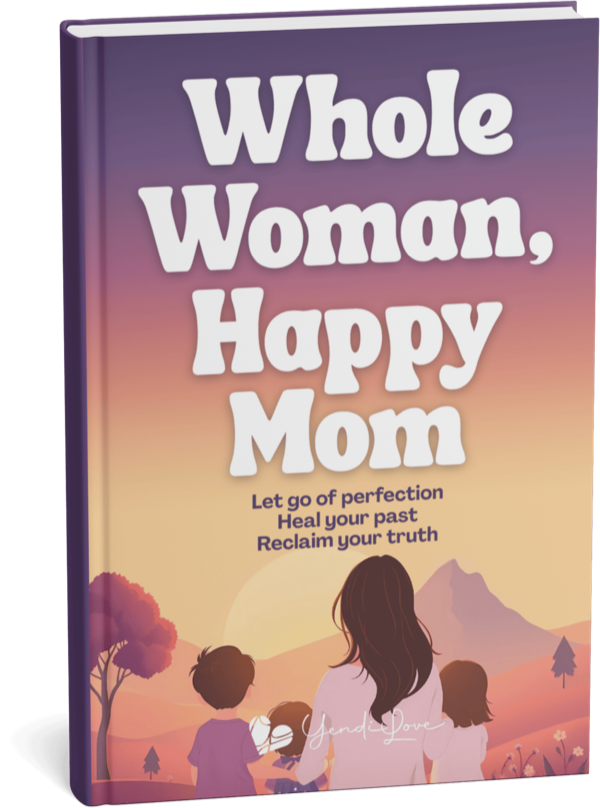
Grief is a complex territory that deserves to be navigated with the right tools and compassionate company. If you feel you need to go deeper into this healing work, in my book “Whole Woman, Happy Mom” I go deeper into these healing tools and how unprocessed grief affects our motherhood.